GLP-1 Face & Facial Volume Loss: How to Restore Firmness and Fullness
What Is 'GLP-1 Face' — and Why Is Everyone Talking About It?
GLP-1 receptor agonists (such as semaglutide and tirzepatide) have transformed weight management for millions of people. But alongside the health benefits, many users are noticing an unexpected side effect: rapid facial deflation. Colloquially known as 'GLP-1 face', this phenomenon describes the hollowing of cheeks, sunken temples, deepened nasolabial folds, and looser skin that can accompany significant or fast weight loss.
The reason is straightforward. Facial fat pads play a crucial structural role — they provide the scaffolding that keeps skin looking plump, lifted, and youthful. When the body loses fat rapidly, the face often loses volume faster than the skin can adapt, leaving it looking gaunt or aged beyond its years.
Importantly, GLP-1 face is not exclusive to medication users. The same pattern of facial deflation occurs with:
- Natural ageing — fat redistribution and collagen loss accelerate from the mid-30s onwards
- Menopause — the drop in oestrogen triggers rapid collagen depletion and fat pad atrophy
- Rapid weight loss from any cause — crash dieting, illness, or post-surgical recovery
Whatever the cause, the skin concern is the same: lost volume, reduced firmness, and a face that no longer reflects how you feel inside.
The Four Dimensions of Facial Volume Loss
Understanding what's actually happening beneath the surface helps you choose the right treatment approach. Facial deflation typically affects four interconnected dimensions:
- Deflation — the loss of subcutaneous fat causes cheeks to hollow and temples to sink, creating a gaunt or tired appearance.
- Deep wrinkles — without the underlying volume to support them, expression lines and nasolabial folds deepen significantly.
- Dehydration — structural skin layers lose their ability to retain moisture, leading to a dry, crepey texture.
- Density loss — collagen and elastin fibres break down, causing the skin to sag along the jawline and neck.
Effective treatment needs to address all four dimensions simultaneously — not just surface hydration.
Can Skincare Actually Restore Facial Volume?
The honest answer: topical skincare cannot replicate the results of surgical fat grafting or dermal fillers. However, a new generation of clinically formulated treatments can make a meaningful, measurable difference — particularly when the volume loss is moderate and caught early.
The key is choosing formulas that work at a structural level: stimulating collagen synthesis, physically plumping the skin from within, improving elasticity, and reinforcing the moisture barrier. Superficial moisturisers simply cannot do this — you need targeted actives with proven delivery mechanisms.
Key Ingredients to Look For
When evaluating a volumising treatment, look for these clinically validated ingredients:
- L-Ornithine Amino Acid — a performance-driven amino acid that physically plumps the skin from within, targeting hollowed contours at a cellular level.
- Bakuchiol — a plant-based retinol alternative that boosts collagen production and improves skin texture without the irritation risk of traditional retinoids. Ideal for sensitive or menopausal skin.
- Kangaroo Paw Flower Extract — rich in organic fatty acids, this botanical extract physically tightens and lifts sagging skin proteins.
- HA Silanol Matrix — next-generation hyaluronic acid bound with silicium to maximise deep hydration retention, rather than sitting on the skin's surface.
- Plant Collagen Fragments — biomimetic fragments that fortify the skin's scaffolding to lift laxity and restore structural integrity.
- Vitamin C — a potent antioxidant that supports collagen synthesis and brightens the complexion.
How to Use a Volumising Treatment for Best Results
Consistency and technique both matter when using a clinical volumising cream. Follow these steps twice daily:
- Cleanse — begin with a gentle, non-stripping cleanser to prepare the skin.
- Apply to clean skin — take a small amount of your volumising treatment and warm it between your fingertips.
- Massage with intention — using upward, lifting motions, work the product along the jawline, across the cheeks, into the nasolabial folds, and down the neck. This technique supports lymphatic drainage and encourages absorption.
- Allow to absorb fully — give the formula 60–90 seconds to penetrate before layering.
- Morning — follow with a broad-spectrum SPF 30 or higher. UV exposure is the single biggest accelerant of collagen breakdown.
- Evening — follow with your preferred night cream or facial oil to seal in the treatment overnight.
For best results, use consistently for a minimum of 12 weeks. Clinical improvements in volume, firmness, and elasticity are cumulative — the skin needs time to rebuild its structural proteins.
What Results Can You Realistically Expect?
Clinical testing on advanced volumising formulas has demonstrated measurable results after 12 weeks of consistent use, including improvements in overall facial volume, skin firmness, net elasticity, and visible reduction in deep wrinkles. Results vary by individual, skin condition, and the degree of volume loss — but most users notice a visible improvement in skin density and texture within 4–6 weeks.
For more advanced or rapid volume loss, a combined approach works best: clinical topical treatment alongside professional aesthetic treatments such as polynucleotides, biostimulators, or hyaluronic acid fillers. Speak to a qualified aesthetic practitioner for a personalised assessment.
Our Recommendation
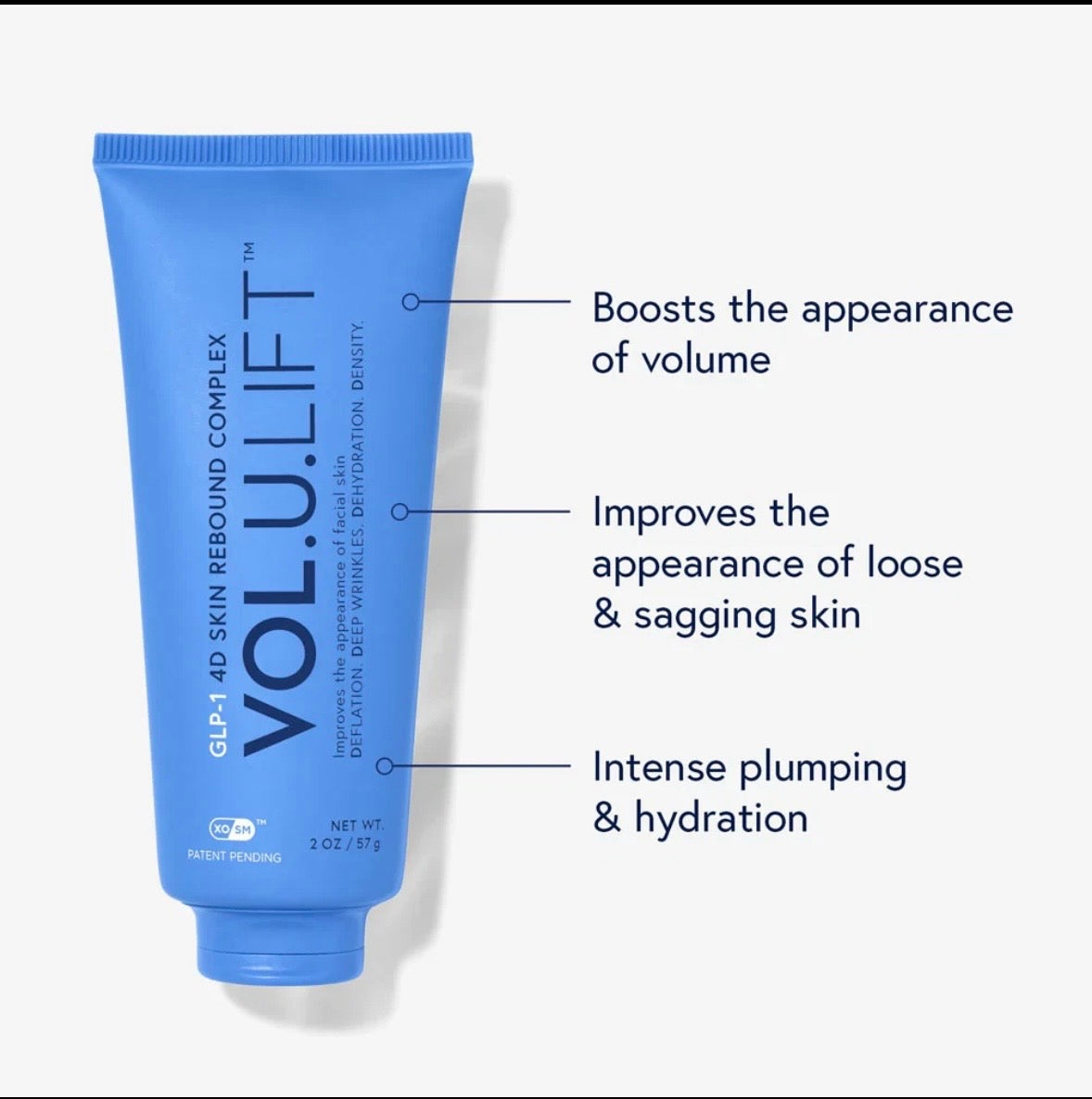
For a physician-formulated treatment specifically engineered to address GLP-1 face, menopausal skin changes, and age-related facial deflation, we recommend the IMAGE Skincare VOL.U.LIFT™. Powered by a patent-pending GLP-1 4D Skin Rebound Complex and XOSM™ smart-encapsulation delivery technology, it targets all four dimensions of facial volume loss in a single, elegant formula — at £84.95.
For a broader selection of clinically proven anti-ageing treatments, explore our Anti-Ageing Skincare collection.
Not sure which treatment is right for your skin? Contact our team for a personalised recommendation.

Written by Terry Winward-Wright